


Among the simplest organisms there are many species that are parasitic in animals and humans.The parasitic protozoa that cause the most common and serious diseases are listed below.
Amoebic dysentery
Dysentery amoebas are similar to regular amoebas but are smaller and have shorter and wider roots.It enters the human digestive system through the mouth at the cyst stage.In the large intestine, the amoeba escapes from the cyst and feeds on bacteria without causing harm to the person.This simple organism then begins to penetrate the intestinal wall, eats red blood cells and becomes a parasite.Ulcers form in the intestines, causing the human body to weaken.Amoebic dysentery, also known as amoebiasis, occurs.
Dysentery amoebiasis can enter the bloodstream and reach the liver.Here, the parasite also leads to the formation of pus-filled ulcers.
Forming cysts, amoebas leave the human body with indigestible food debris.Mild cysts spread easily.If you don't wash your hands and eat, you can get infected.
Plasmodium malaria
Plasmodium is a parasitic protozoa.Some Plasmodium species cause malaria in humans.The carrier of malaria is the malaria mosquito.When bitten by an insect, plasmodium enters the host's bloodstream.Together with the blood, it reaches the liver, feeds there, grows and multiplies.More plasmodia then enter the bloodstream and begin to parasitize red blood cells, destroying them and releasing their waste products, which are toxic to the host.One person has a fever and is anemic.
If a person with malaria is bitten again by a malaria mosquito, the plasmodia will be transmitted from person to mosquito.Plasmodium reproduces sexually within the mosquito's body.
Malaria is common in Africa.This is a very dangerous disease.Malaria is fought by killing mosquitoes that carry malaria.
Trypanosomes
The genus Trypanosomes includes flagellated parasitic protozoa (closely related to Euglena).Their main hosts are vertebrates and disease carriers are usually insects.Different representatives of trypanosomes cause different diseases in animals and humans.They parasitize mainly in blood and cerebrospinal fluid.The most famous and common disease caused by trypanosomes is sleeping sickness.
The vector that transmits sleeping sickness is the tsetse fly.This disease is endemic to tropical Africa.Sleeping sickness develops in two stages: in the first weeks, a person is tormented by fever and pain, after a month or more drowsiness occurs, disturbances of sleep and coordination, as well as changes in consciousness.The disease is easier to treat in its early stages.
Giardia
Giardia is a genus of flagellated parasitic protozoa.Intestinal lamblia causes giardiasis in humans and animals, in which the parasite lives in the small intestine.
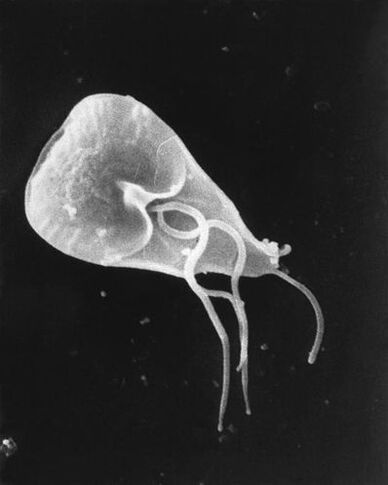
A person becomes infected with giardiasis by eating unwashed food that contains Giardia cysts.After exiting the cyst, lamblia attaches to the intestines and feeds on digested food.
Leishmania
Leishmania is another genus of parasitic protozoa.They cause leishmaniasis in humans and many other animals.The carrier of the disease is the mosquito.
There are different types of leishmaniasis that involve damage to different tissues of the body.One of them is the skin disease Pendensky ulcer.
Coccidiosis
Coccidia parasitize many animals, including worms, arthropods, and fish.They cause coccidiosis, causing serious damage in livestock and aquaculture.
Coccidia settle in spore form containing parasitic cells.
Coccidia includes the genus Toxoplasma.Their representatives cause such a common human disease as toxoplasmosis.A person becomes infected from livestock or poorly prepared meat food.Toxoplasma affects many organs, including the nervous system.